


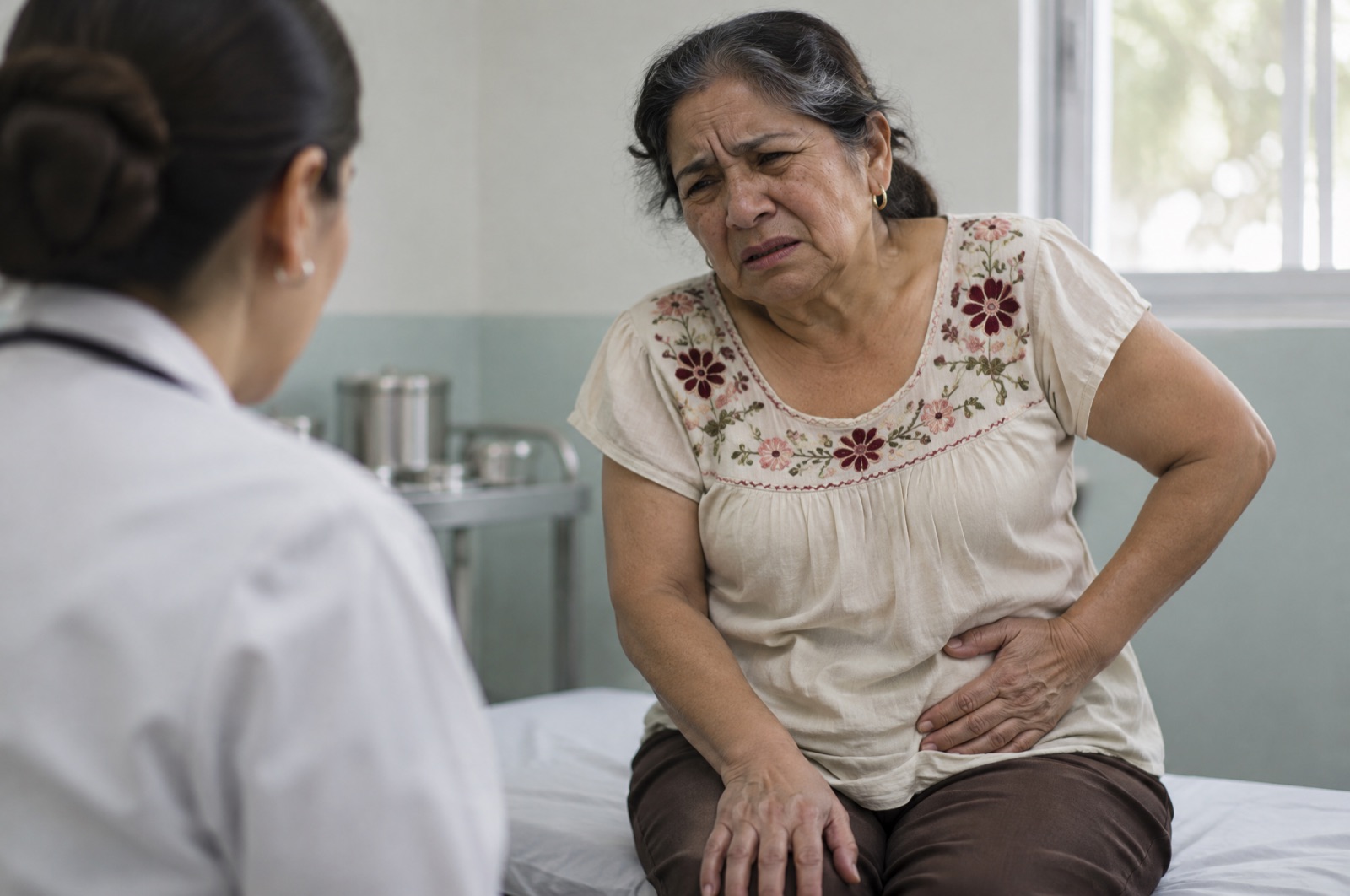
If you have severe abdominal pain with vomiting, a swollen abdomen or no stool or gas passing, or heavy bleeding from the bottom, go to the emergency department. Hospital Galenia, Cancún. Switchboard 998 891 5200. In an emergency, call 911.
How do you recognize diverticulitis?
According to the NIDDK, diverticulitis can cause:
- Abdominal pain, most often in the lower left side.
- Fever and chills.
- Nausea or vomiting.
- Constipation or diarrhea.
The pain is typically severe and sudden, although it can also be mild and worsen over several days. The NHS warns that the symptoms resemble other conditions, such as irritable bowel syndrome, so the diagnosis is not made from the story alone: the American Gastroenterological Association (AGA) notes that a CT scan is often necessary.
How is an uncomplicated episode treated?
The NIDDK states that uncomplicated diverticulitis may be treated at home, while severe or complicated diverticulitis, or a high risk of complications, usually means treatment in hospital. Usual care includes:
- A clear liquid diet for a short time, then slowly adding solid foods back.
- Painkillers. Paracetamol (acetaminophen) or antispasmodics are preferred; non-steroidal anti-inflammatory drugs (NSAIDs) such as ibuprofen may raise the chance of complications.
- Antibiotics, not always. The AGA states they can be used selectively rather than routinely in people with a normal immune system and mild uncomplicated diverticulitis, and are strongly advised for people who are immunocompromised.
The World Society of Emergency Surgery (WSES) guidelines suggest a re-assessment within 7 days for people treated as outpatients, and sooner if things get worse.
When is emergency surgery considered?
The NIDDK notes that doctors usually recommend surgery for complications such as perforation, peritonitis, fistula or bowel obstruction, and when diverticulitis does not improve with treatment. The operation removes the affected part of the colon (a colectomy or colon resection).
With an abscess, care depends on its size: small ones can be treated with antibiotics, while large ones or those that do not improve are usually drained; if drainage is not possible and the clinical condition does not allow antibiotics alone, the WSES guidelines call for an operation. The same guidelines describe diffuse peritonitis from a perforation as a serious condition that needs intravenous fluids, antibiotics and prompt surgery. The NHS adds that some people need a colostomy.
What about planned surgery to stop it coming back?
After an uncomplicated episode, removing the affected part of the colon is sometimes offered to prevent further episodes. It is no longer decided by counting episodes: the AGA states that elective surgery should not be advised based on the number of episodes, but personalised to the severity of disease, risks and benefits, and each patient's preferences. The WSES guidelines likewise weigh individual factors rather than the number of episodes.
The AGA adds that the risk of complicated diverticulitis is highest at the first episode. After a large abscess has healed, the NIDDK mentions that surgery may be recommended to stop it coming back.
What comes after the episode?
According to the AGA, whether you need a colonoscopy depends on your history, your most recent colonoscopy and how the episode went; MedlinePlus mentions that for some people it is recommended 6 to 8 weeks afterwards. To lower the risk of it coming back, the AGA advises a high-quality diet, a healthy weight, physical activity, not smoking and avoiding NSAIDs, except aspirin prescribed to prevent cardiovascular problems.
To review tests and options, you can book an assessment at office 501, Hospital Galenia, by WhatsApp (998 550 0002). The NIDDK advises seeing a doctor right away for any bleeding from the rectum, even a small amount. With severe pain and vomiting, a swollen abdomen, heavy bleeding or a fever that will not go away, go to the emergency department at Hospital Galenia (switchboard 998 891 5200) or call 911.
This guide is for orientation. It does not replace a consultation.
Frequently asked questions
Does diverticulitis always need surgery?
No. Many uncomplicated episodes are treated without surgery. An operation is considered for perforation, peritonitis, fistula, obstruction, an abscess that cannot be drained, or when the condition does not improve.
Are antibiotics always needed?
Not always. In people with a normal immune system and mild uncomplicated diverticulitis they can be used selectively; for people who are immunocompromised they are recommended. Your doctor decides after the assessment.
After several episodes, does part of the colon have to be removed?
Not necessarily. The AGA states that elective surgery should not be decided by the number of episodes, but personalised to severity, risks and benefits, and your preferences.
Can I take ibuprofen for the pain?
It is best avoided: NSAIDs such as ibuprofen may raise the chance of diverticulitis complications. Paracetamol is usually preferred, always on medical advice.
Sources
- Symptoms & Causes of Diverticular Disease
- Treatment for Diverticular Disease
- Diverticulitis
- AGA Clinical Practice Update on Medical Management of Colonic Diverticulitis: Expert Review
- 2020 update of the WSES guidelines for the management of acute colonic diverticulitis in the emergency setting
- Diverticular disease and diverticulitis
This guide is for orientation and does not replace a medical consultation. In an emergency, call 911.