


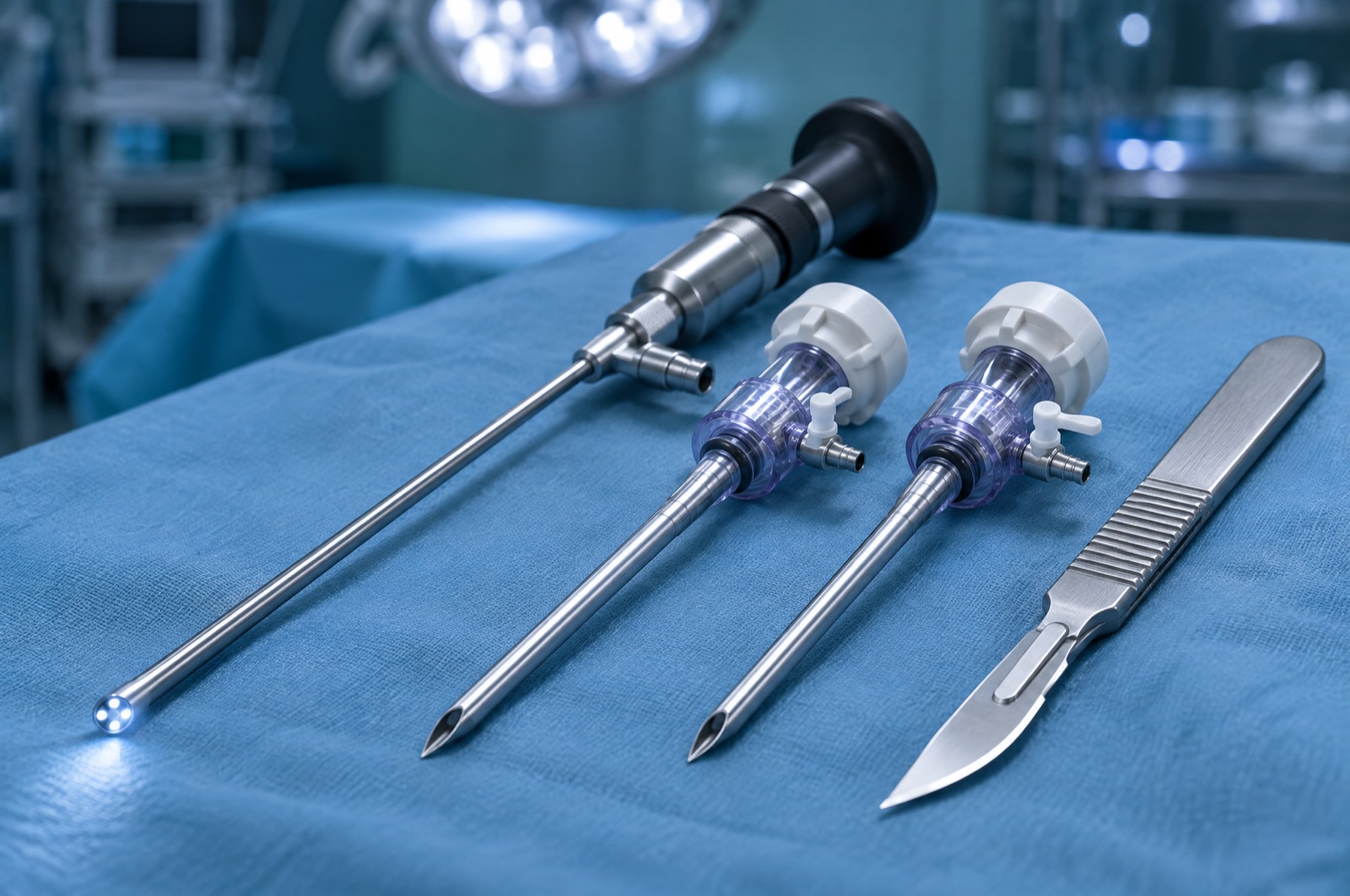
What laparoscopic surgery is
Under general anaesthesia a camera and instruments are passed through small incisions. For the gallbladder, it is separated from the liver, its duct and artery are closed, and it is removed through one of the incisions. For a hernia, mesh is placed. For appendicitis, the appendix is removed when the picture allows it.
It is not a different technique for each person as a matter of how the scar will look. It is the planned approach when anatomy and inflammation allow it. When they do not, it is done another way.
When it is converted to open surgery
It is converted when continuing through the small ports is less safe: severe inflammation, scarring from earlier operations, bleeding that is not well controlled that way, or anatomy that cannot be identified clearly. It is not a failed laparoscopy. It is finishing the operation by the safer route.
The scar is larger, recovery is usually slower and the quote changes. Those three things are said before scheduling, as a possibility, so they do not appear as a surprise on the day.
What to ask at the consultation
Ask which approach is planned in your case, what finding would change it, and how the person with you would be told if it happens in the operating room. Also ask how the stay and the return to work would change. For the gallbladder, in the usual scenario without complications, there is one night in hospital, and return to work is seven to ten days in most cases. Each person’s interval is set at the consultation and depends on their work.
The written quote has to allow for that possibility, or say clearly what would fall outside it. I do not publish a single figure.
This guide is for orientation. It does not replace a consultation.
Frequently asked questions
Is laparoscopy always possible?
No. It is the approach when the case allows it. If the abdomen has to be opened, the reason is safety, and it is explained.
Is converting to open surgery a complication?
It is a change of approach, not a mistake. It makes the operation safer at that moment. It changes the wound, the recovery and the quote.
Do I only find out afterwards?
The possibility is explained before scheduling, when it can be foreseen. If it happens in the operating room, it is explained to you and to the person with you as soon as it can be.