


Why not fly as soon as you leave hospital?
An aircraft cabin is pressurised to roughly the air pressure at 6,000 to 8,000 feet, and the CDC links that change to its advice to wait after abdominal or chest surgery. After laparoscopy, some of the gas used during the operation may also remain.
The other reason is blood clots. According to the CDC, surgery and air travel each raise the risk of thrombosis on their own, and traveling soon after surgery raises it further.
What timings do official sources give?
- CDC (Yellow Book): do not fly for 10 days after chest or abdominal surgery.
- CDC (Travelers' Health): delay air travel for 10 to 14 days after major surgery, particularly chest surgery.
- UK Civil Aviation Authority (CAA): avoid travel for 10 days after abdominal surgery, and for about 24 hours after laparoscopy because of residual gas in the abdomen. That short window is about the gas only, not about full recovery.
These are general references for planning. Your surgeon sets the timing for your case based on the operation, your progress and your risk factors.
How can you lower the risk of clots while traveling?
The CDC considers any trip longer than 4 hours, by air, car or bus, a risk, and lists surgery in the past 3 months among the factors that raise it. For those journeys it recommends:
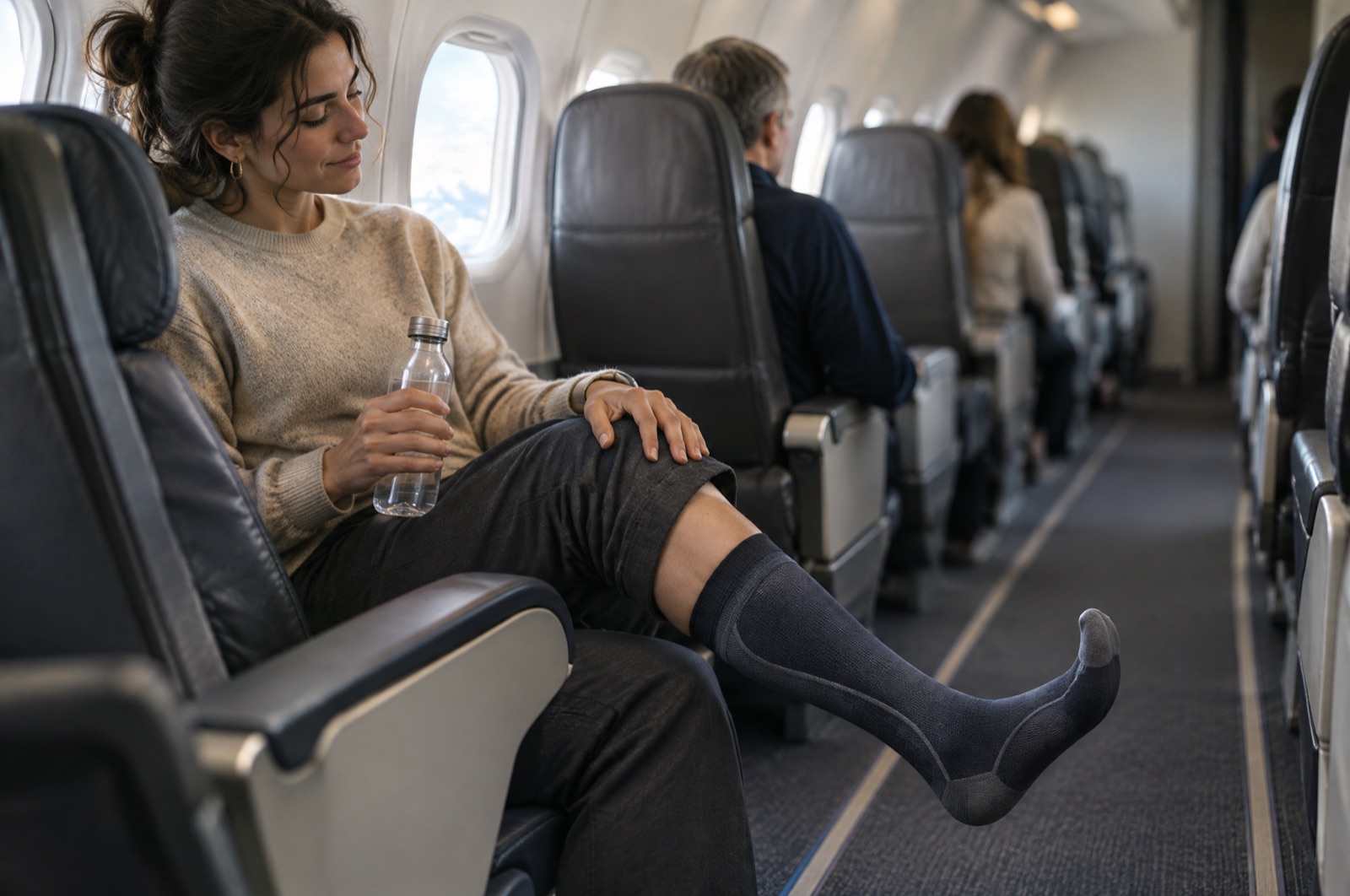
- Getting up and walking often, and working your calf muscles while seated.
- Choosing an aisle seat: the CDC links it to lower risk than a window or middle seat.
- Asking your surgeon whether graduated compression stockings suit you.
- If you were prescribed a blood thinner, taking it exactly as instructed.
Which symptoms mean you should get help?
A clot in the leg can cause swelling, pain, warmth or redness in the affected leg. A clot in the lungs can cause shortness of breath, chest pain that gets worse with deep breaths or coughing, a fast heartbeat, coughing up blood, or fainting.
With leg symptoms, the CDC advises contacting a doctor as soon as possible; with chest symptoms or shortness of breath, getting medical care right away. If it happens in Cancún, go to the emergency department at Hospital Galenia (switchboard 998 891 5200) or call 911.
How should you plan the trip home if you have surgery far away?
Avoid booking a fixed return date before your assessment. Ask at the consultation how much margin your case needs, and travel with your discharge instructions and a copy of your records. More in having surgery in Cancún when you live elsewhere.
This guide is for orientation. It does not replace a consultation.
Frequently asked questions
Can I fly the day after laparoscopic surgery?
The UK CAA mentions about 24 hours only because of gas that may remain in the abdomen. That does not mean your recovery allows it: the CDC advises waiting 10 days after abdominal surgery, and your surgeon sets the date.
Do compression stockings help on the plane?
According to the CDC, graduated compression stockings appear to reduce symptomless clots in travelers. Whether you should wear them, and which kind, is your surgeon's call.
Is a long bus or car trip safer than flying?
Not where clots are concerned. The CDC considers any trip longer than 4 hours a risk, whether by air, car or bus, so plan stops and walk.
Who decides when I can fly?
Your surgeon, based on the operation, your progress and your risk factors. Guideline timings are references, not clearances.
Sources
- CDC Yellow Book 2026: Medical Tourism
- Medical Tourism: Travel to Another Country for Medical Care
- Surgical conditions: guidance for health professionals
- CDC Yellow Book 2026: Deep Vein Thrombosis and Pulmonary Embolism
- Understanding Your Risk for Blood Clots with Travel
This guide is for orientation and does not replace a medical consultation. In an emergency, call 911.