


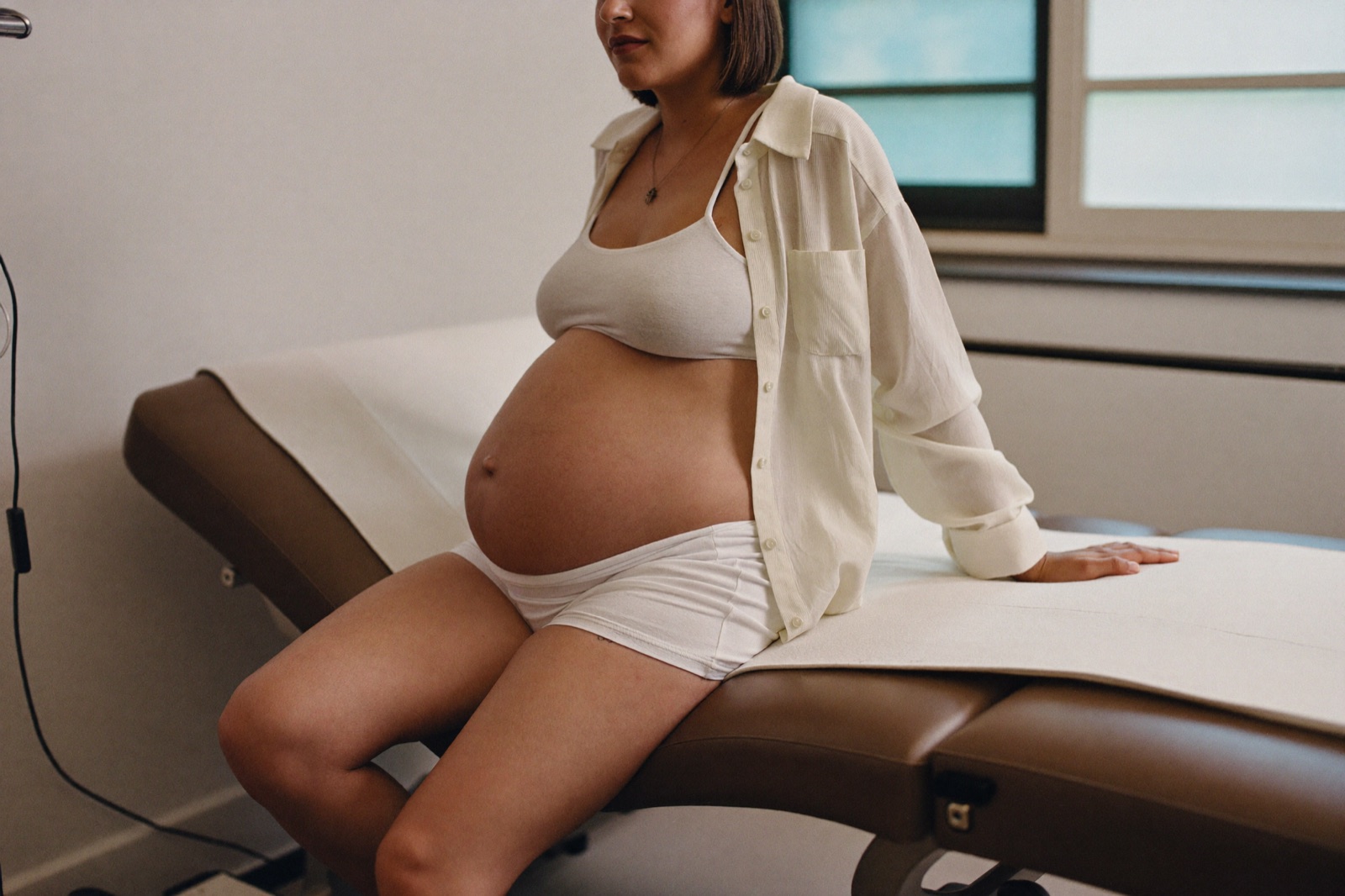
Pregnant with severe upper abdominal pain, fever or yellow skin? Go to the emergency department at Hospital Galenia (switchboard 998 891 5200) or call 911, and let your obstetrician know.
Why does pregnancy favor gallstones?
Pregnancy hormones raise cholesterol in bile and make the gallbladder empty more slowly, which favors biliary sludge and stones. Gallbladder removal is the second most common non-obstetric abdominal operation during pregnancy.
How is it investigated without affecting the baby?
The symptoms are the same as outside pregnancy: pain in the upper right abdomen, often after heavy meals, with nausea or vomiting (gallstone symptoms). The test of choice is ultrasound, which uses no ionizing radiation and has no known risks.
Fever, chills, yellow skin or eyes, dark urine, or pain lasting several hours need care right away.
Can it wait until after delivery?
It depends on the problem. According to SAGES, biliary colic can sometimes be managed without surgery, with the gallbladder removed after delivery, but it often comes back, especially when it starts early in pregnancy. Waiting also risks progression to more serious disease, such as gallstone pancreatitis, which has worse outcomes.
Acute cholecystitis and bile duct stones, on the other hand, must be treated more promptly.
What do the SAGES guidelines recommend?
- For biliary disease in pregnancy, they suggest laparoscopic cholecystectomy over non-surgical treatment (conditional recommendation, very low certainty evidence).
- For acute cholecystitis, they also suggest laparoscopic cholecystectomy (low certainty evidence).
- For biliary colic in the third trimester, operating or not operating are both reasonable; the choice depends on severity, how long symptoms have lasted and how far along the pregnancy is.
- For symptomatic bile duct stones, they suggest ERCP rather than surgical bile duct exploration, in any trimester (expert opinion).
SAGES also cites the position of the American College of Obstetricians and Gynecologists: a pregnant woman should never be denied, or have delayed, medically necessary surgery, regardless of trimester.
Why is the second trimester often mentioned?
Late in pregnancy, the uterus limits working space and makes laparoscopic access harder, and obstetric complications such as preterm delivery become more likely. A study cited by SAGES found a higher risk of preterm delivery after gallbladder surgery in the third trimester than in the second. So when surgery can be planned, the second trimester usually offers better conditions than the third; when it is urgent, it is done when needed.
The decision is made case by case, with your obstetrician kept informed. At office 501, Tower B, Hospital Galenia in Cancún, the assessment and the operation are done by the same surgeon, Dr. Elinor Vázquez, who sees patients in Spanish and English.
This guide is for orientation. It does not replace a consultation.
Frequently asked questions
Is gallbladder surgery safe during pregnancy?
The 2024 SAGES guidelines suggest laparoscopic cholecystectomy over non-surgical care, though the evidence is of low or very low certainty. The risk of operating is weighed against the risk of the disease progressing.
Can I wait until after the birth to have surgery?
For some cases of biliary colic, yes, but it often comes back. Acute cholecystitis and bile duct stones should not wait.
Can ERCP be done during pregnancy?
Yes. For symptomatic bile duct stones, the SAGES guidelines suggest ERCP, rather than surgical bile duct exploration, in any trimester.
Does a gallbladder ultrasound affect the baby?
It uses no ionizing radiation and has no known risks. It is the test of choice for looking for gallstones during pregnancy.
Sources
- SAGES guidelines for the use of laparoscopy during pregnancy
- Gallstones
- Abdominal ultrasound
- Symptoms & Causes of Gallstones
This guide is for orientation and does not replace a medical consultation. In an emergency, call 911.